Medical Eye Exams & Monitoring in Las Vegas

We provide comprehensive medical eye exams for patients of all ages. Whether you’ve already been diagnosed with a chronic eye condition or you’re at higher risk because of family history, age, or health factors. We’re here to help you preserve your sight through regular monitoring and early intervention.

We use advanced diagnostics and a clear, step-by-step approach to help you stay informed, supported, and confident in your care plan.

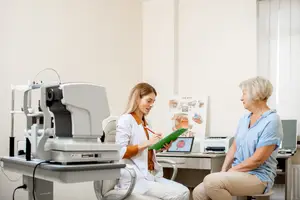
An adult woman is sitting on a chair while a woman in a white coat is holding a pen and paper in her hand and looking at the woman sitting on a chair.
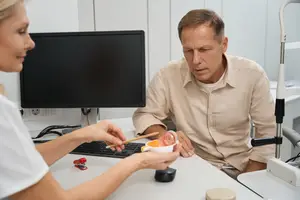
A man is examining an eye model with a woman in an eye clinic

Common Eye Conditions We Screen For 

Our team is trained to detect a wide range of vision-threatening diseases, including:

Glaucoma

A condition caused by pressure buildup that damages the optic nerve over time. Often called the “silent thief of sight”, because symptoms can go unnoticed until damage has occurred. Regular pressure checks and visual field tests are key to early detection.

Diabetic Retinopathy

High blood sugar levels can affect the small blood vessels in the eyes, leading to vision loss. If you have diabetes, we recommend annual diabetic eye exams with retinal imaging.

Macular Degeneration

This age-related condition affects the part of your eye responsible for central vision. We track changes in your retina over time using OCT scans to catch and monitor macular degeneration early.

Cataracts

Cataracts cause the lens to become cloudy, resulting in blurry vision and glare. We monitor the progression of cataracts and help you determine when it’s time to consider surgery. We also provide post-operative support and referrals.

Advanced Imaging for Better Monitoring

We use state-of-the-art diagnostic tools to monitor your eye health:

  • Optomap®: Ultra-widefield retinal imaging that shows early signs of disease without dilation.

  • OCT (Optical Coherence Tomography): 3D imaging of the retina and optic nerve to detect microscopic changes.

  • Visual field testing: Measures your peripheral vision to track the progression of glaucoma.

  • Retinal photography: Baseline images that help us compare changes year to year.

These technologies help us identify changes early, before symptoms begin.

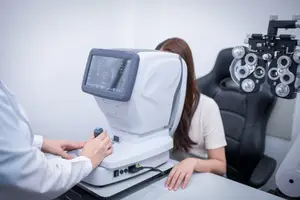
A woman is having her eyes examined by a doctor in a white coat.
A man in a white shirt is smiling and holding a pen while sitting on a chair in an office with a woman in a white coat sitting in front of him holding a notebook.

A Clear Eye Disease Care Plan, Every Step of the Way

Living with an eye condition can feel overwhelming. Dr. Vo takes the time to explain your diagnosis, review your imaging results, and walk you through the next steps.

You’ll leave every appointment knowing:

  • What we’re watching for

  • How your vision is doing

  • What treatment options are available

  • When your next check-up should be

We believe in collaboration when it comes to managing your eye health.

Who Should Be Screened for Eye Diseases?

Even without symptoms, you may be at higher risk if you:

  • Are over age 40

  • Have diabetes or high blood pressure

  • Have a family history of glaucoma or macular degeneration

  • Are highly nearsighted

  • Have experienced sudden changes in your vision

If any of these apply to you, we recommend scheduling a comprehensive exam with diagnostic imaging.

A smiling man with a beard and mustache is wearing a blue shirt and is looking to the right. Behind him, there is a window with a view of a garden with various potted plants and flowers. The man's shadow is cast on the wall to his left.
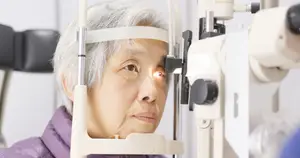
An elderly woman undergoing an eye examination at an optometrist's office.

Bilingual Support in English, Vietnamese, & Spanish

You should never feel uncertain about your care due to a language barrier. Dr. Vo and our staff offer fluent communication in English, Vietnamese, and Spanish, so you and your family can fully understand your diagnosis and care plan.

Take Control of Your Eye Health

Eye disease doesn’t have to mean vision loss, but early detection is key. Whether you’re managing a diagnosis or getting screened for peace of mind, we’re here to support your long-term vision and quality of life.