
Early detection and regular monitoring to protect your central vision.
Macular Degeneration Care in Las Vegas


What Is Macular Degeneration?
Macular degeneration, also called age-related macular degeneration (AMD), is a condition that affects the macula, the part of the retina responsible for sharp, central vision. AMD is a leading cause of vision loss in people over 50, especially if not detected early.
There are two main types of AMD:
-
Dry AMD: The most common type. It causes gradual thinning of the macula over time.
-
Wet AMD: Less common but more serious. It involves abnormal blood vessel growth that can leak and scar the retina quickly.
Both forms of AMD can lead to central vision loss if not monitored and treated appropriately.
Signs & Symptoms of Macular Degeneration
Early macular degeneration may not cause noticeable symptoms, which is why regular exams are important. As it progresses, patients may experience:
-
Blurry or fuzzy central vision
-
Difficulty reading or seeing faces clearly
-
Distorted lines or shapes
-
A dark or empty spot in the center of vision
-
Trouble with contrast or low light
If you notice these signs, schedule an exam right away so we can assess your macula and provide next steps.


Who Is at Risk for AMD?
Your risk increases with age, but other factors may include:
-
Family history of AMD
-
Smoking
-
High blood pressure or cardiovascular disease
-
Poor diet low in leafy greens or antioxidants
-
Prolonged UV exposure
-
Light eye color
We recommend annual eye exams with imaging for adults over 50 and those with risk factors.
How We Detect & Monitor Macular Degeneration
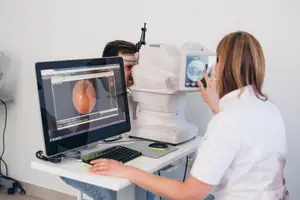
At Dana Vo OD, we use advanced imaging tools to examine your retina in high detail. These include:
-
OCT (Optical Coherence Tomography): Provides cross-sectional scans of the macula to detect thinning or fluid buildup.
-
Optomap® retinal imaging: Captures a wide-angle view of the retina to track changes over time.
-
Visual acuity and contrast testing: Helps us understand how AMD may be affecting your functional vision.
These tools allow us to detect even the earliest signs of AMD before vision loss occurs.

What to Expect After a Macular Degeneration Diagnosis
If you are diagnosed with macular degeneration, we’ll create a monitoring plan based on the type and stage of your condition. Care may include:
-
More frequent retinal imaging to monitor progression
-
Nutritional guidance or supplements to support eye health
-
Referrals to retinal specialists if advanced treatment is needed
-
Lifestyle tips to reduce risk factors and protect remaining vision
For wet AMD, prompt referral to a retina specialist for injection therapy or other treatment is essential. We’ll help coordinate care and explain your options clearly.
Multilingual Patient Education & Support
Dr. Vo and our team speak English, Vietnamese, and Spanish, and we explain all test results, imaging, and care recommendations in clear, simple language. Whether you are newly diagnosed or seeking a second opinion, we’re here to help.

Schedule a Macular Health Exam
If you are over 50 years old, have a family history of AMD, or are experiencing changes in your vision, schedule an exam today. The sooner we detect changes, the more we can do to protect your sight.